
Before the First Heat Wave: A California Family Checklist for Aging Parents at Home
Help your aging parent prepare for warmer weather with this practical California heat safety checklist. Learn simple ways to support comfort, hydration, routine, and peace of mind at home.
PERSONALIZED CARE
Erlyn A. Pinkston
5/19/20263 min read
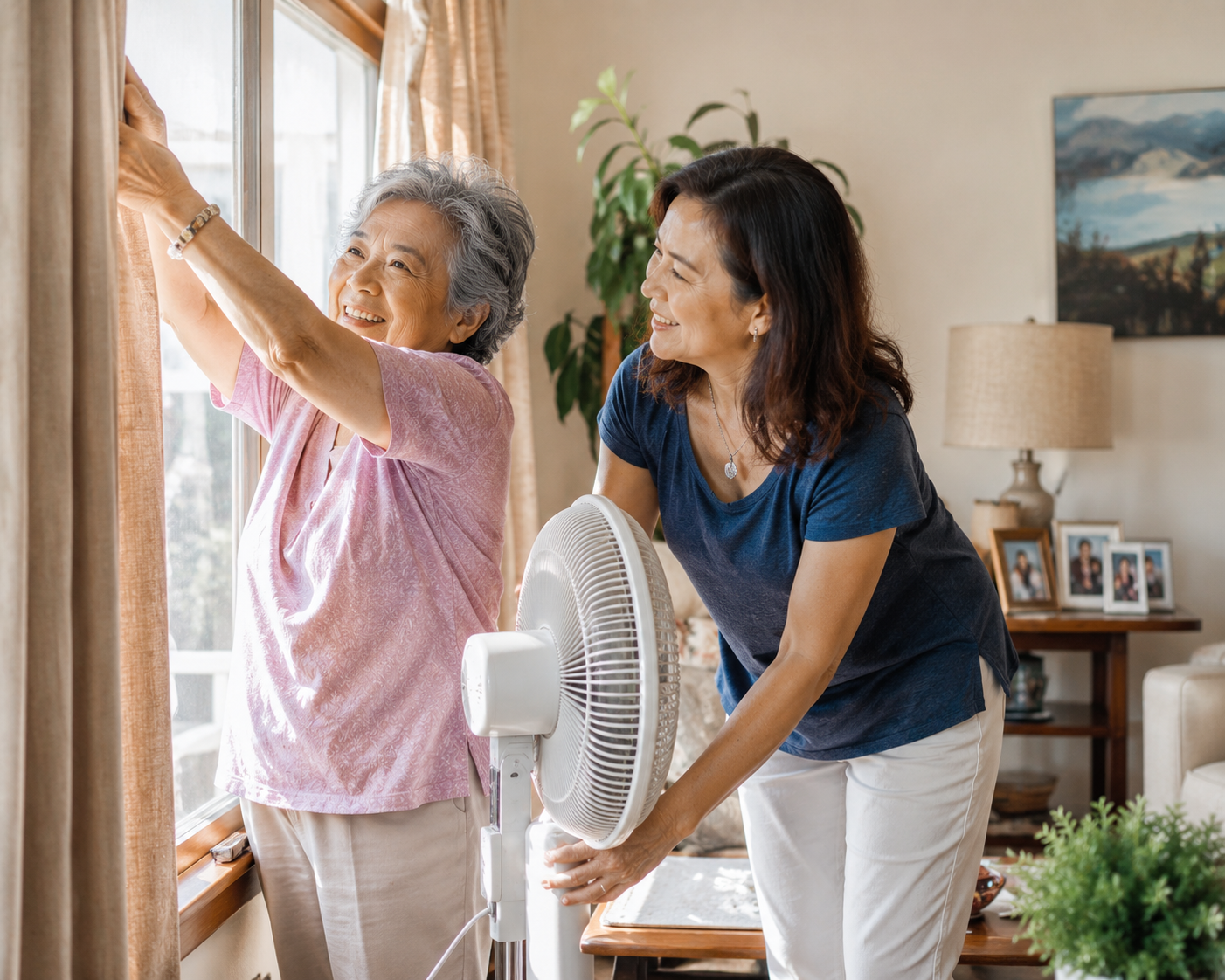

As the weather begins to warm up in California, many families start thinking about summer plans, longer days, and time outside. But for families with aging parents, this is also an important time to think ahead about comfort and safety at home.
Older adults can be more sensitive to rising temperatures. A home that feels “fine” in spring can become uncomfortable very quickly once the first heat wave arrives. Even small changes in routine, hydration, or indoor temperature can make a big difference.
The good news is that preparing early does not have to feel overwhelming. With a few thoughtful steps, families can help older loved ones stay safe, comfortable, and supported at home.
Why Hot Weather Can Be Harder on Seniors
As we age, the body may not adjust to heat as easily as it once did. Some older adults may not feel thirsty right away. Others may avoid drinking enough water because they do not want to get up often or use the restroom more frequently. Some may also prefer to keep windows closed or avoid using fans or air conditioning to save money.
For family caregivers, this means summer safety often begins with simple observation and gentle planning.
A Practical California Heat Readiness Checklist
1. Check the Home’s Cooling Basics
Before the hottest days arrive, take a look around the home.
Ask yourself:
Is the air conditioning working properly?
Are fans available and easy to reach?
Do windows open safely for airflow if needed?
Are curtains or blinds available to block strong afternoon sun?
Is the thermostat easy to read and use?
Even if your loved one has cooling equipment, they may not always use it consistently. A quick check now can prevent stress later.
2. Make Hydration Easy
Hydration sounds simple, but it is often one of the first things that slips. Instead of only reminding your loved one to drink more water, make it easier for them to do so naturally.
Helpful ideas include:
Keeping a filled water bottle or cup nearby
Offering drinks they enjoy, such as water with fruit, herbal tea, or diluted juice
Setting simple hydration reminders during the day
Including hydrating foods like watermelon, cucumber, oranges, or soup
The goal is not pressure. The goal is to make healthy habits feel easy and comfortable.
3. Review Their Daily Routine
Take a moment to look at how their day usually flows.
Do they tend to sit in the warmest room in the house?
Do they run errands during the hottest part of the afternoon?
Are they dressing in heavy layers even when the weather changes?
Sometimes the best support comes from small adjustments, such as:
Encouraging lighter clothing
Planning walks or errands earlier in the day
Moving regular activities to cooler parts of the home
Keeping rest time part of the routine during hotter afternoons
4. Keep the Kitchen Simple
Warmer weather can also affect appetite and energy. Some older adults may feel less interested in preparing meals when the house feels warm. Others may skip proper meals altogether.
To help, consider:
Preparing light, easy-to-eat meals
Keeping healthy snacks visible and accessible
Making sure the refrigerator is stocked with easy options
Simplifying meal prep when possible
A little support with meals can go a long way in helping seniors feel more comfortable during hot weather.
5. Make Emergency Information Easy to Find
Summer in California can also bring power outages or other disruptions. It helps to have important information ready in one place.
Keep a simple list that includes:
Emergency contact names and numbers
Doctor contact information
A list of medications
Preferred pharmacy
Nearby family or neighbors who can check in
This is not about expecting the worst. It is about making everyday life feel more manageable and less stressful if something unexpected happens.
6. Notice Small Signs of Discomfort
Sometimes older adults do not clearly say that they are too warm, tired, or uncomfortable. Families often notice it in more subtle ways.
Pay attention if your loved one seems:
More tired than usual
Less interested in eating or drinking
More irritable or withdrawn
Unsteady from fatigue
Less engaged in their normal routine
These signs do not always mean something serious is wrong, but they do tell you it may be time to offer more support.
7. Consider How Much Help They Really Have Day to Day
One of the biggest questions families ask is not, "What should I do in an emergency?” but rather, “How do I make sure things are consistently okay every day?”
That is often where non-medical in-home care can help.
A caregiver can provide support with daily routines, meal preparation, companionship, mobility assistance, medication reminders, and general oversight that helps seniors stay comfortable at home. Just as importantly, families gain peace of mind knowing someone is there to help keep things steady.
Preparing Early Brings More Peace of Mind
You do not have to wait until the hottest week of summer to start thinking about support. A calm conversation now, a few home adjustments, and a little extra help can make the season feel much more manageable for everyone.
At Unique Quality Care, we believe support should help seniors remain safe and comfortable in the home they love while giving families more confidence and reassurance along the way.
If your family is thinking about how to better support an aging loved one at home this season, Unique Quality Care is here to help with compassionate, non-medical in-home care that protects comfort, independence, and peace of mind.

Our Links
Mailing Address
P.O. Box 115 Garden Grove
CA 92842-115